 Overwatch2Arena
As I dove into a recent community discussion, I was struck by a simple yet powerful idea that could fundamentally change how we all play Overwatch 2. The conversation centered on a feature I, and every other support main, take for granted: the ability to see the full-colored silhouettes and health status of all my teammates at all times. This isn't just a quality-of-life tool; it's the very lens through which I perceive the battlefield, allowing me to make split-second decisions about healing priorities and positioning. But what if this critical intel wasn't locked behind the support role? What if our tank and damage players could see the game through our eyes? This thought, sparked by a passionate Reddit thread, has become one of the most compelling discussions about teamwork and game design in 2026.
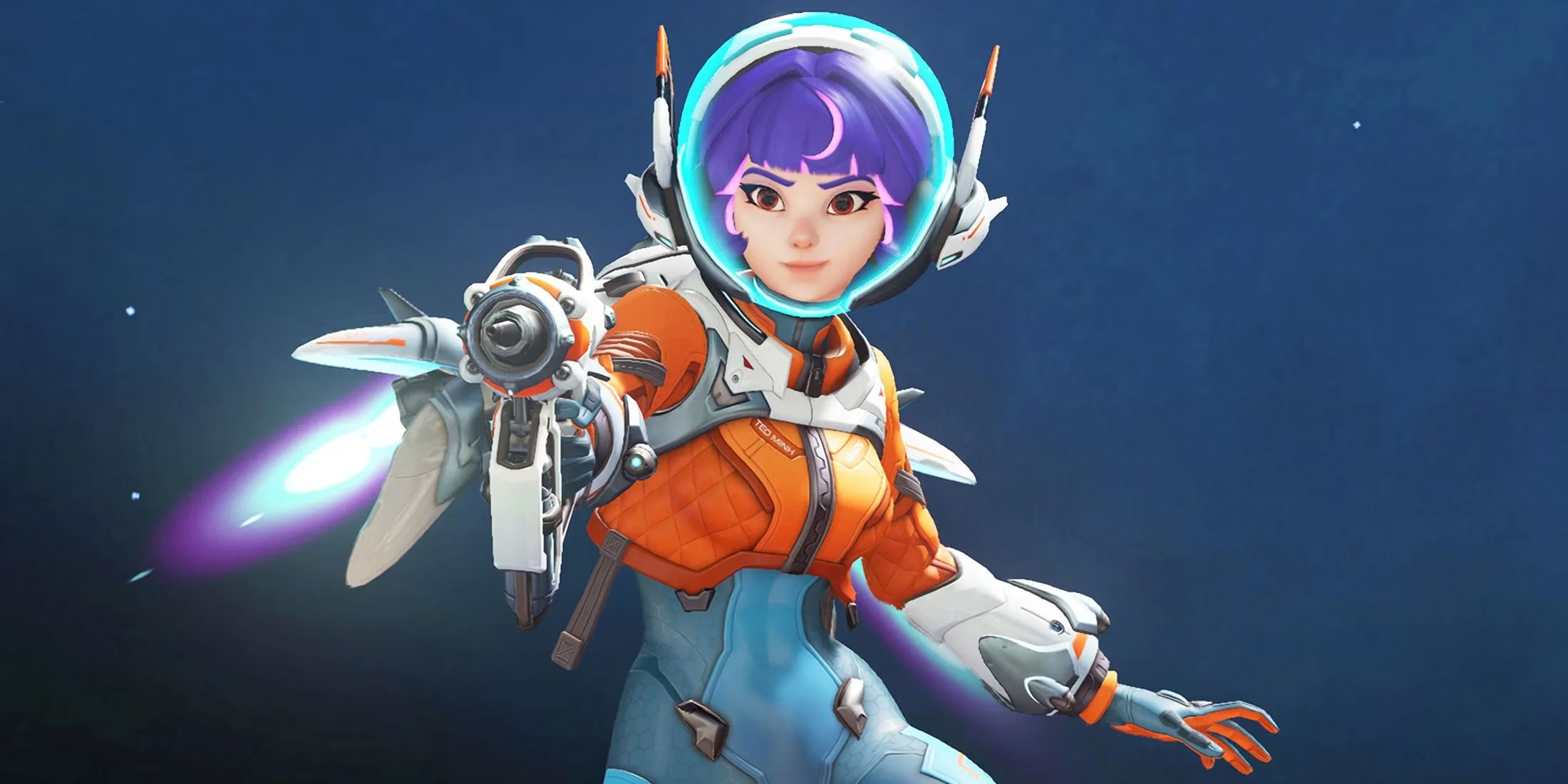
Seeing the Battlefield Through a Support's Eyes
Let me paint you a picture from my last match as Ana. I'm perched on high ground, my scope scanning the chaos below. Thanks to the vibrant silhouettes, I instantly see our Reinhardt's outline flash from healthy green to a cautionary yellow as he absorbs a Rocket Barrage. At the same moment, I notice our Tracer's silhouette, a tiny crimson sliver, blinking erratically behind enemy lines. In a heartbeat, I prioritize: a biotic grenade at the tank's feet for burst healing and an immediate, scoped shot to save our flanker. This flow of information is seamless for me. But for our Reinhardt player? He only has the faint, often hard-to-see outline of teammates through walls. He might not have realized how close Tracer was to dying or that I was momentarily focused on saving her, which could explain why he chose to drop his shield and charge in, thinking he had full support. The information asymmetry is real, and it creates a subtle disconnect in team cohesion.
The Community's Vision for Unified Team Awareness
The Reddit thread that ignited this debate was a masterclass in player insight. The original poster didn't just ask for a feature; they articulated a new philosophy for team-based play. Their core argument was about empathy and synchronized decision-making. If a Damage hero like Soldier: 76 could see his support's silhouette actively channeling healing into the tank, he would intuitively understand, "My healer is occupied, I should play more cautiously or use my Biotic Field." Conversely, a Tank player like D.Va, seeing a critical-health Genji silhouette behind her, might decide to peel back and provide cover instead of diving deeper. The proposed benefits are multifaceted:
-
Enhanced Game Sense: All players gain a superior understanding of the "flow" of a fight—where pressure is being applied and where it's needed.
-
Reduced Frustration: Clear visibility into support cooldowns and focus would cut down on those "I need healing!" spams from players who are out of line-of-sight or when supports are literally already healing someone else.
-
Strategic Empowerment: It turns every player into a more informed strategist. A Sombra planning an EMP could wait for the perfect moment when she sees both supports' silhouettes clustered together.
Addressing the Clutter Concern: A Toggle for Freedom
Of course, no major UI change comes without valid concerns. Some players in the discussion worried about visual clutter, arguing that the Overwatch 2 HUD is already dense with information. This is a fair point! The last thing anyone wants is for crucial enemy cues to be lost in a fog of friendly outlines. However, the community's solution was elegant and already precedented in the game's design: make it a toggleable option.
Overwatch 2 already allows players to customize a staggering amount of UI elements, from kill feed placement to health bar styles. Adding a menu option under "Gameplay" or "Accessibility" titled "Teammate Health Silhouettes" with settings for "Always On," "Critical Health Only," or "Off" would satisfy everyone. Tank and Damage players who want the full support-style awareness can enable it. Those who prefer a cleaner screen or find it distracting can disable it. This preserves the skill element of game sense for purists while offering a powerful tool for those who want to maximize team coordination. It's a win-win that respects player agency.
The Bigger Picture: Evolving the Hero Shooter in 2026
Thinking about this feature in 2026, it feels less like a simple buff and more like a natural evolution for the genre. Modern hero shooters and team-based games are increasingly about shared situational awareness. Tools that help a team of strangers function like a premade unit are invaluable. This change wouldn't "dumb down" the game; it would elevate the level of play by removing an arbitrary information barrier. It aligns perfectly with Overwatch 2's continued focus on making teamwork more intuitive and rewarding.
From my perspective in the support seat, I welcome this change wholeheartedly. It would mean my teammates truly understand the challenges I face in triaging heals across a dynamic fight. It would foster a shared language of awareness. When I make a callout like "Healing our tank, DPS play safe," they would already see the evidence glowing through the walls. It transforms teamwork from something you hope for into something you can literally see and act upon. In the end, giving all roles the support's view isn't about making the game easier—it's about making us a better, more connected team. And in the fast-paced, ult-charged battles of 2026, that connection is the ultimate key to victory. 🎯
Potential Impact Summary:
| Aspect | Current State (2026) | With Universal Silhouettes |
|---|---|---|
| Team Awareness | Fragmented; support has full view. | Unified; all roles share the same critical intel. |
| Strategic Peels | Often reactionary or based on comms. | Can be proactive based on visible health status. |
| Support Communication | Requires constant vocal updates. | Visual info reduces necessary callouts. |
| Player Frustration | "I need healing!" vs. "I'm busy!" dynamic. | Mitigated by transparent visual context. |
| Accessibility | High game sense barrier for non-supports. | Lowers barrier, allows focus on other skills. |
As hero shooters continue to evolve, staying informed about the latest strategies, updates, and community insights is more important than ever. Whether you're a seasoned player or a newcomer looking to sharpen your skills, finding reliable resources can make all the difference in your gameplay experience.
For those who want to dive deeper into guides, discussions, and tools tailored to competitive gaming, Lootbar is a great place to start. With content curated for gamers across all levels, it’s a hub for enhancing your understanding and enjoyment of team-based games like Overwatch 2. Explore their resources to stay ahead in the ever-changing world of hero shooters.
Comments