 Overwatch2Arena
In the ever-shifting cosmos of competitive gaming, 2026 finds the landscape of hero-shooters not as a static battleground, but as a living, breathing ecosystem where giants stir from long slumbers and new constellations ignite the sky. A profound tremor recently echoed through this domain, originating from the hallowed halls of Blizzard's Team 4. After a journey of thirteen seasons shaped by the focused, often tumultuous, 5v5 format, Overwatch 2 has cast a gaze backward, announcing the return of its foundational 6v6 structure through extensive playtests in Season 14. This move is not merely a nostalgic reverie; it is a strategic symphony composed in response to the genre's evolving harmonics, a deliberate recalibration aimed at addressing a community debate that has simmered like a dormant volcano since the sequel's inception over four years ago.
Team 4, the architects of this world, once spoke of a vision where 5v5 and 6v6 could not coexist—a binary choice defining reality. Yet, the winds of change, carrying whispers from rival realms and the fervent petitions of a dedicated player base, have reshaped that vision. The studio now suggests that, contingent on the resonance of community feedback, 6v6 could transcend its experimental phase and become a permanent fixture, a parallel universe within Overwatch 2's cosmos. The timing of this revelation is a masterstroke of celestial alignment, far removed from happenstance. The year 2024 proved to be a supernova moment for the genre, birthing new contenders like Deadlock and, most notably, Marvel Rivals—a title that launched its iconic, third-person 6v6 chaos just days before Blizzard's own tests were slated to begin.
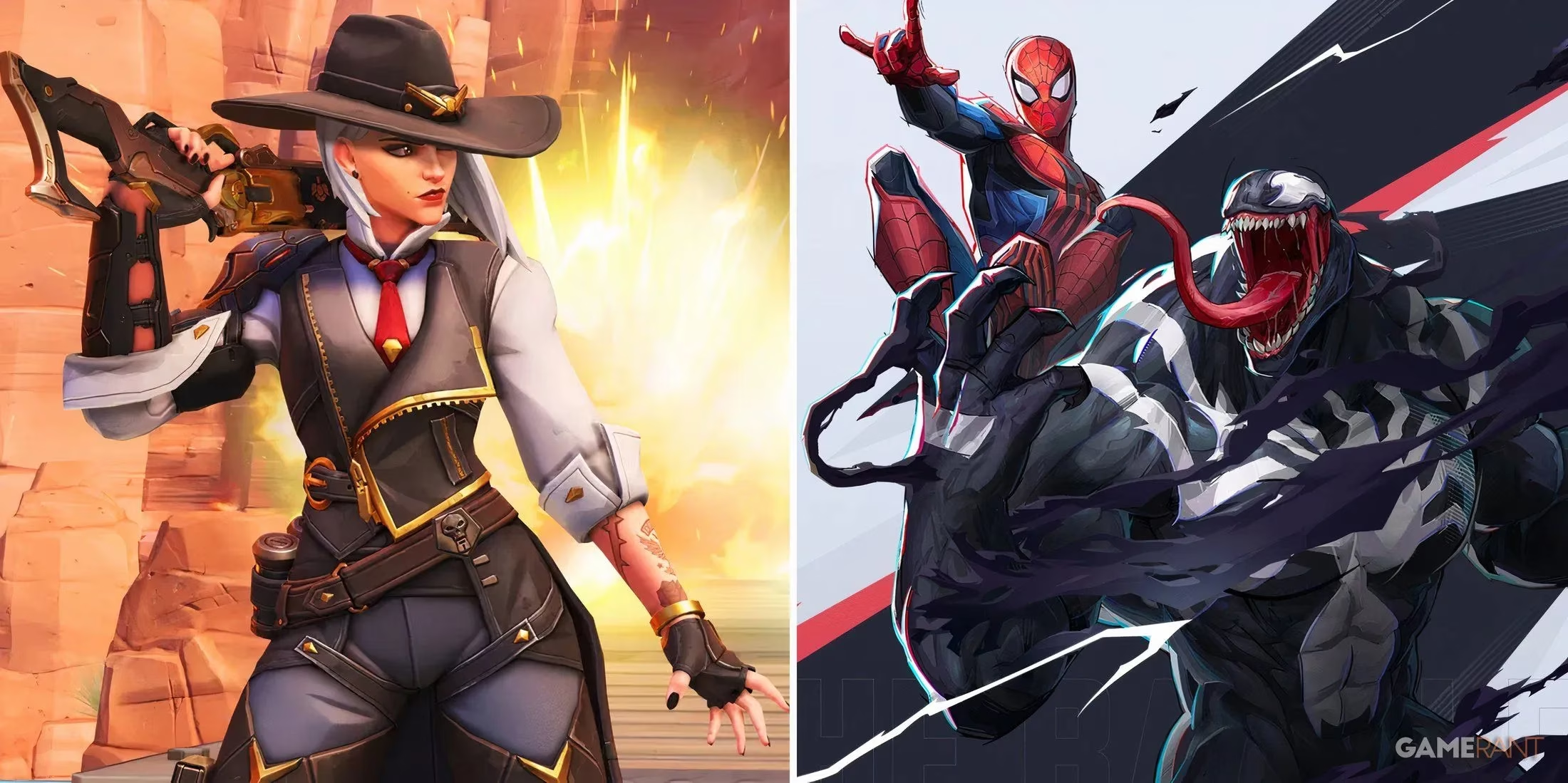
The re-emergence of 6v6 is a multifaceted gem, each facet reflecting a different light. For many veterans, the shift to 5v5 was like trading a grand, orchestral ensemble for a taut, demanding quartet. The pressure consolidated onto a single tank player became a crushing weight, a burden that often warped strategic diversity into a rigid, meta-dependent playbook. Heroes like Mauga, Orisa, and D.Va cycled through periods of dominance, their reigns sometimes feeling less like strategic choices and more like mandatory rites for survival. The 5v5 experiment, while birthing new playstyles and faster-paced skirmishes, never fully silenced the chorus longing for the classic tactical dance of two tanks—a dance where protection and disruption could be harmoniously divided, like twin moons governing a planet's tides.
Blizzard's formal address of the 5v5 versus 6v6 debate in mid-2024, shortly after Marvel Rivals' first closed alpha, was a signal flare. In the "Group Up!" podcast, Game Director Aaron Keller and Lead Hero Designer Alec Dawson observed the emerging competition not with trepidation, but with the keen interest of master cartographers watching new lands be discovered. "Competition is good. It’s healthy, and it starts to crystalize what makes [our] game special, too," they reflected. This acknowledgment reveals a conscious strategy: the timetable for 6v6 playtesting is a purposeful response, a way to remind the world of Overwatch's unique essence while engaging with the desires of its community. It is an attempt to offer a sanctuary within their own IP, a familiar harbor for those who found the 5v5 seas too stormy.
Yet, to view this solely as a reactive maneuver is to miss the broader, more poetic narrative. The modern gaming ecosystem possesses a vast and generous capacity for coexistence. Overwatch 2 and its inspired contemporaries are not locked in a gladiatorial death match, but are engaged in a symbiotic waltz. Each title, with its distinct mechanics and artistic soul, acts as a polishing stone for the other, refining and defining what makes each experience unique. Overwatch 2's legacy is its crisp, first-person purity, its engine a finely-tuned instrument for ability-based teamwork. Marvel Rivals, by contrast, offers a third-person spectacle of super-powered synergy, a living comic book panel where every clash feels epic. Their simultaneous exploration of 6v6 is less about imitation and more about parallel evolution, like two distinct species developing wings on different continents.
As we stand in 2026, the playtests represent more than a balance patch or a new map; they are a philosophical homecoming. The data gathered, the feedback loop with players, will determine if 6v6 becomes a permanent altar beside the 5v5 shrine. This potential duality could transform Overwatch 2 into a vast, choose-your-own-adventure tome, where players select not just their hero, but the fundamental rhythm of the battle itself. Will the classic, macro-strategic 6v6 provide the depth veterans crave, or will the streamlined intensity of 5v5 remain the dominant heartbeat?
The hero-shooter genre, once perceived as a kingdom with a single ruler, has blossomed into a vibrant archipelago. Blizzard's move is a testament to this new reality—a confident, creative entity listening to its past and its players while eyeing the horizon. The return of 6v6, therefore, is not a retreat, but an expansion. It is the opening of a forgotten wing in a grand museum, inviting everyone to rediscover old masterpieces and see how their colors change under the new light of 2026. The ultimate victor of this era may not be any single game, but the players themselves, blessed with an unprecedented richness of choice and the thrilling spectacle of watching titans inspire each other to ever-greater heights.
Comments