 Overwatch2Arena
In the ever-evolving landscape of Overwatch 2, the introduction of the Wave Respawn mechanic in Season 12 stands as a pivotal moment, a subtle yet profound shift in the game's fundamental rhythm. More than a mere quality-of-life adjustment, this innovation has woven a new thread of fairness and collective purpose into the fabric of matches, transforming chaotic, individualistic skirmishes into coordinated waves of resurgence. As the data from the 2026 season reveals, this seemingly simple change—where heroes who fall within six seconds of one another are resurrected together—has become a cornerstone for healthier, more engaging player-versus-player encounters, proving that sometimes, the most impactful victories are those fought and forged as one.
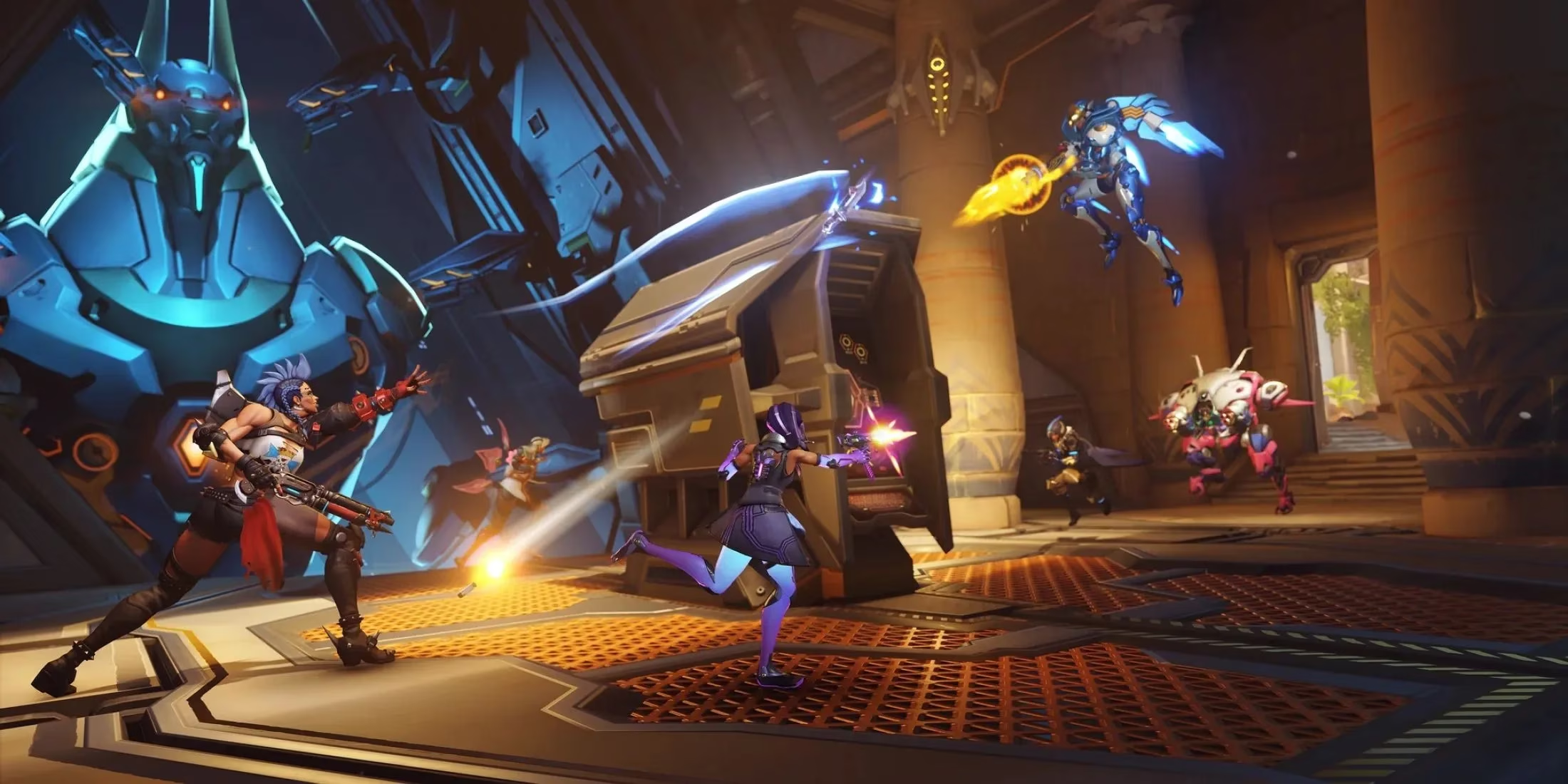
The Mechanics of Unity: How Wave Respawn Works
Wave Respawn represents the natural evolution of its predecessor, the Group Respawn system. While Group Respawn initiated the concept of synchronized returns, Wave Respawn refines it into a more dynamic and responsive mechanic. The core principle is elegant: when a hero falls in battle, a brief, six-second window opens. Any ally who perishes within this temporal gateway is "caught" in the same wave. Instead of trickling back onto the battlefield in a vulnerable, staggered fashion, these heroes are resurrected simultaneously, as a united front. This mechanic applies across various game modes, fundamentally altering the tempo and strategy of engagements. It discourages the lone-wolf mentality that often leads to catastrophic, snowballing defeats, instead incentivizing players to consider their positioning and timing in relation to their comrades' fates.
Quantifying the Impact: A Statistical Renaissance
The numbers speak with a clarity that resonates through the ranks. Analysis from the Overwatch 2 development team, led by systems designer Gavin Winter, provided compelling evidence of the feature's success in its inaugural season and its sustained impact into 2026.
Key Statistical Improvements:
| Game Mode | Reduction in One-Sided Matches | Primary Catalyst |
|---|---|---|
| Quick Play | Up to 8% decrease | Direct implementation of Wave Respawn |
| Competitive Play | Approximately 5% fewer than previous seasons | Wave Respawn offsetting initial ranked reset volatility |
This data is particularly striking when contextualized. The introduction of Wave Respawn coincided with a seasonal ranked reset in Competitive Play—an event historically associated with a temporary increase in mismatched, lopsided games as player ratings recalibrate. Yet, the season demonstrated a net decrease in one-sided contests. This indicates that the cohesive force of Wave Respawn had a more powerful effect on match fairness than the disruptive potential of the reset. As the community has settled into the 2026 competitive landscape, this positive trend has not only held but deepened, with the reduction in frustrating "stomp" matches becoming even more pronounced.
The Ripple Effect: Healthier Gameplay and Player Psychology
The benefits of Wave Respawn extend far beyond cold statistics; they permeate the very experience of play. One-sided matches, where one team feels powerless, are a notorious source of player frustration and attrition. By reducing their frequency, Wave Respawn directly contributes to the long-term vitality of the Overwatch 2 ecosystem.
Core Psychological and Gameplay Benefits:
-
Promotes Team Cohesion: 🫂 The mechanic serves as a constant, gentle reminder of the game's team-oriented nature. Players are subtly encouraged to stay grouped, coordinate dives and retreats, and fight as a unit, knowing their collective fate is intertwined.
-
Reduces Snowballing: ❄️➡️☀️ A single, lost team fight is less likely to cascade into an irreversible defeat. With the team respawning together, they can regroup, re-strategize, and mount a coordinated defense or attack, keeping the match competitive for longer.
-
Empowers Strategic Comebacks: 🔄 The potential for dramatic turnarounds increases. A well-timed, sacrificial play by one or two heroes to secure key eliminations can now bring back the entire wave, instantly swinging momentum and creating legendary, clutch moments.
-
Improves the New Player Experience: 🎓 For those learning the ropes, being repeatedly picked off alone is a discouraging experience. Wave Respawn helps newer players naturally fall into the rhythm of team play, making early games less punishing and more instructive.
The Evolutionary Path: From Group to Wave
Wave Respawn did not emerge in a vacuum. It is the thoughtful successor to the Group Respawn feature, which laid the groundwork by introducing batch respawns in Quick Play. The evolution from "Group" to "Wave" signifies a shift from a static, rule-based system to a dynamic, opportunity-based one. Group Respawn operated on fixed conditions; Wave Respawn creates a flowing, responsive window for teamwork, even in death. This expansion of the concept into more game modes, including Competitive Play, marks Blizzard's commitment to iterating on successful ideas to broaden their positive influence across the entire game.
The Future of Fair Fights in Overwatch 2
As Overwatch 2 sails through 2026 and beyond, the Wave Respawn mechanic stands as a testament to the developer's focus on systemic, long-term improvements to match health. Its success underscores a philosophy that prioritizes fair, fun, and engaging interactions over pure, unbridled individualism. The feature aligns with other experimental shifts the community has discussed, such as the potential return of 6v6 formats, all pointing towards a holistic approach to curating the game's feel and flow.
The initial data was promising, but the sustained positive impact has cemented Wave Respawn's role. It is more than a spawn timer adjustment; it is a behavioral catalyst, a design choice that quietly teaches the value of unity. In a game where heroes clash with world-altering abilities, this simple rule—that we rise together, or we fall alone—has proven to be one of the most powerful forces for good in the pursuit of the perfect, balanced match.
For players eager to stay ahead of the curve and explore new strategies with Wave Respawn, resources and communities dedicated to Overwatch 2 provide ample opportunities for engagement. Whether you're looking for in-depth guides, strategy discussions, or simply a place to connect with fellow enthusiasts, these platforms offer invaluable support. One such resource, Lootbar, provides a comprehensive hub for gaming insights, tips, and community interactions. By joining platforms like Lootbar, players can deepen their understanding of game mechanics and contribute to the vibrant Overwatch community.
To truly master the art of team play and strategic comebacks, immersing oneself in the shared wisdom of experienced players can be transformative. As the game evolves, so too does the collective knowledge surrounding it, and engaging with platforms such as Lootbar ensures that players have access to the latest tactics and discussions. By tapping into these resources, Overwatch enthusiasts can enhance their gameplay experience, ensuring that they are well-equipped to embrace the exciting challenges and victories that Wave Respawn brings to the battlefield.
Comments