 Overwatch2Arena
The digital arenas of Overwatch 2 have long been a crucible for passionate debate, a vibrant nexus where the echoes of its celebrated past clash with the ambitions of its evolving present. At the heart of this ongoing symphony of contention lies a single, deceptively simple variable: the number of heroes on the field. The shift from the original's 6v6 formations to the sequel's 5v5 structure was not merely a numerical tweak; it was a foundational tremor that recalibrated the very soul of team combat. As the year 2026 unfolds, this question has crystallized into the game's most pressing philosophical and practical crossroads. A chorus of players, their voices laced with a potent nostalgia, clamors for a return to the familiar chaos of six-player teams, while the developers grapple with the tangible benefits their current system was designed to secure. In this landscape, the specter of compromise—offering both formats—looms not as a solution, but as a potential fracture line that could permanently divide the world they've built.
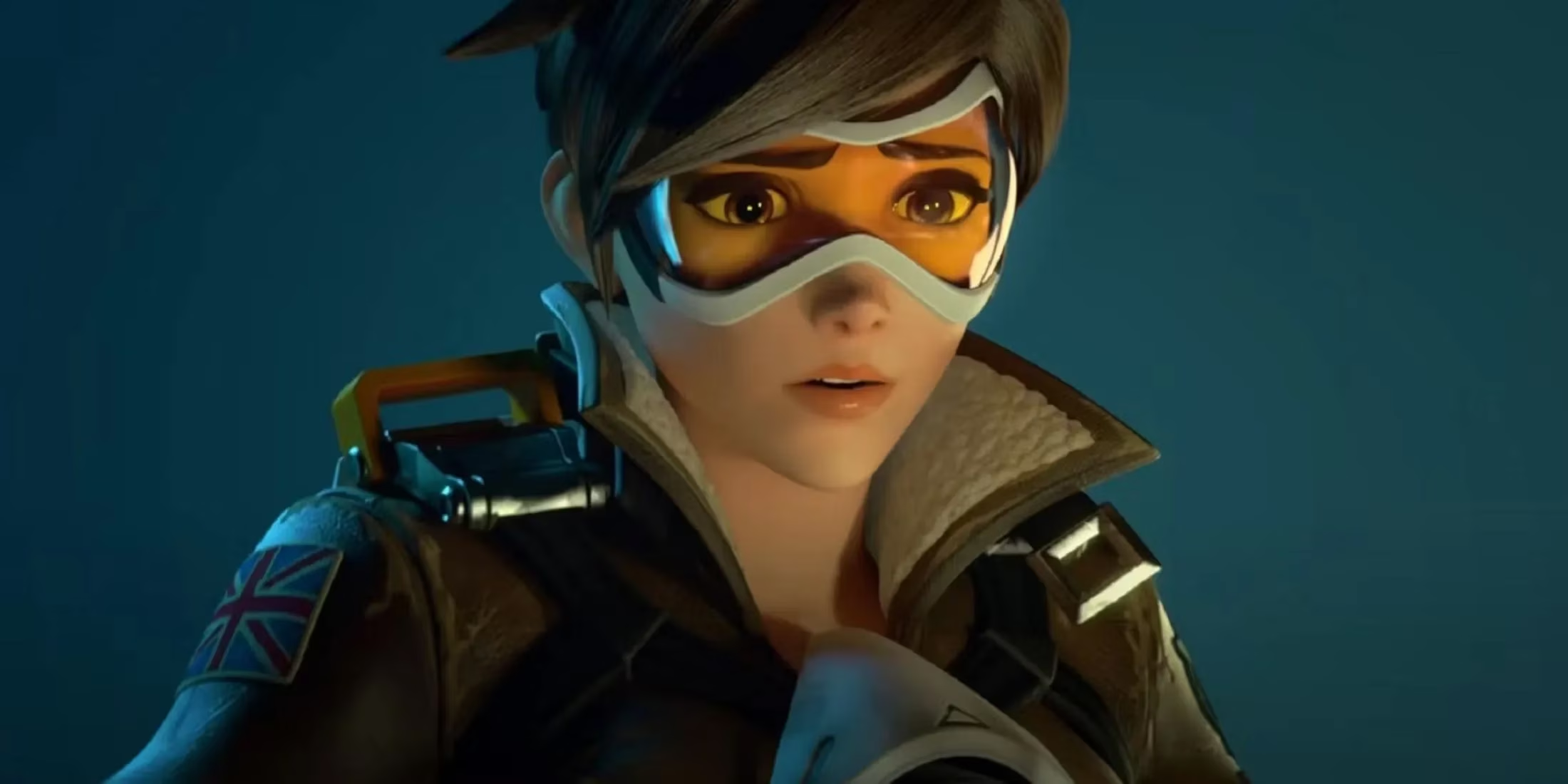
The Calculus of Speed and Space
The architects of Overwatch 2 embarked on their redesign with a clear, pragmatic principle in mind: efficiency. A smaller team composition, they reasoned, would yield swifter, more dynamic engagements. By reducing the roster from six to five and, most significantly, limiting each team to a single tank, they aimed to achieve a dual victory. Firstly, matchmaking queues would theoretically shorten, as the system requires fewer players to assemble a complete lobby. Secondly, the pace of battle itself would accelerate, stripping away the often-stagnant double-tank defensive lines that could bog down matches in the original title. This was a deliberate move away from complex, layered engagements toward a more streamlined, decisive style of play. The intention was to make every encounter feel more immediate and every player's impact more pronounced.
The Siren Call of a Six-Hero Symphony
Yet, for all its intended streamlining, the 5v5 format has failed to quiet the longing for the past. The nostalgia for Overwatch's 6v6 is a powerful, multifaceted force. It is not merely a preference for a larger number, but a yearning for a specific texture of gameplay that many feel has been lost.
-
Strategic Depth & Composition: The original format allowed for richer, more varied team compositions. The double-tank meta, for all its occasional frustrations, created intricate webs of synergy, protection, and space creation that demanded high-level coordination. Its absence has, in the view of many veterans, simplified the game's strategic ceiling.
-
The Social Fabric: Perhaps the most emotionally resonant argument is a social one. The 6-player team seamlessly accommodates a full squad of friends. The simple, joyous idea of bringing a complete group into battle without leaving anyone behind is a powerful motivator behind the demand for a return.
-
A Question of Balance: Critics of the current system argue that shrinking team size was a solution to the wrong problem. The core issues of hero balancing and matchmaking quality, they contend, were not resolved but merely reframed. The competitive meta in Overwatch 2 remains in constant flux, and some believe the 5v5 structure has made individual overpowered heroes more dominant, rather than fostering true team-based equilibrium.
The Peril of the Middle Path: A Compromise That Satisfies None
Faced with this passionate divide, the notion of offering both 5v5 and 6v6 queues has been floated—a digital Solomon's judgment. However, this path is fraught with peril that threatens the game's core health. Implementing dual queues would effectively shatter the player base, creating two parallel, smaller universes. The consequences would be stark and detrimental:
| Consequence of Dual Queues | Impact on Game Health |
|---|---|
| Fragmented Player Pool | Matchmaking times would inevitably increase for both modes, nullifying the original benefit of faster queues. |
| Diluted Development Focus | Balancing heroes, maps, and modes for two fundamentally different team sizes would become a nightmare, likely leading to neglect for one format. |
| Community Schism | The player base would be permanently split, weakening the sense of a unified community and shared experience. |
| Queue Imbalance | One mode would naturally become dominant, leaving the other a barren "ghost queue" with interminable waits, frustrating all who prefer it. |
This compromise would force players into becoming unwitting adversaries. Those queueing for the less-popular mode would directly contribute to longer waits for those in the popular one, and vice-versa. Instead of building a cohesive world, the game would institutionalize its own internal conflict.
The Inevitable Choice: Forging a Single Future
The debate over team size is a vital sign of a community deeply invested in the game's soul. Yet, in 2026, Overwatch 2 stands at a juncture where attempting to please everyone may please no one. The developers are tasked with a difficult but necessary choice: to commit decisively to one vision of competitive play. The data, player sentiment, and the fundamental logistics of maintaining a healthy online ecosystem all point toward the necessity of a single, unified queue system. Whether that future is a refined and rebalanced 5v5 that addresses its shortcomings, or a triumphant, modernized return to 6v6 glory, the path forward requires conviction. The arena awaits a definitive verdict, for a game divided against itself in its foundational rules cannot stand the test of time. The next evolution must be a clear step in one direction, carrying its lessons from the past into a coherent and sustainable future for all who answer the call.
As the competitive landscape continues to evolve, players often look beyond the game itself to stay connected and engaged. Lootbar, a platform accessible through DealNest, offers a space where fans can explore game-related services and items, making it a useful companion for those invested in the future of their favorite titles. While the debate over team composition unfolds, having reliable resources to turn to can help keep the community spirit alive and thriving.
Comments