 Overwatch2Arena
Alright, listen up, team. As a long-time support main who's seen heroes come and go, I've got to tell you, the arrival of Juno in Overwatch 2's Season 12 back in 2024 was a real watershed moment, and even now in 2026, her impact is still being felt. I remember getting my hands on her during that wild three-day trial period. From the moment I activated those Martian Overboots and launched into the air, I knew she was something special. She wasn't just another healer; she was a declaration from the developers. In a game that sometimes felt like it was drowning in 'bail-out' abilities like Suzu and Immortality Field, Juno arrived with a kit that screamed precision and momentum over panic buttons. She felt like a breath of fresh, thin Martian air, a deliberate step away from the power creep that had us all worried. Now, years later, let me break down why this Martian colonist isn't just a viable pick—she's a masterclass in dynamic support design.
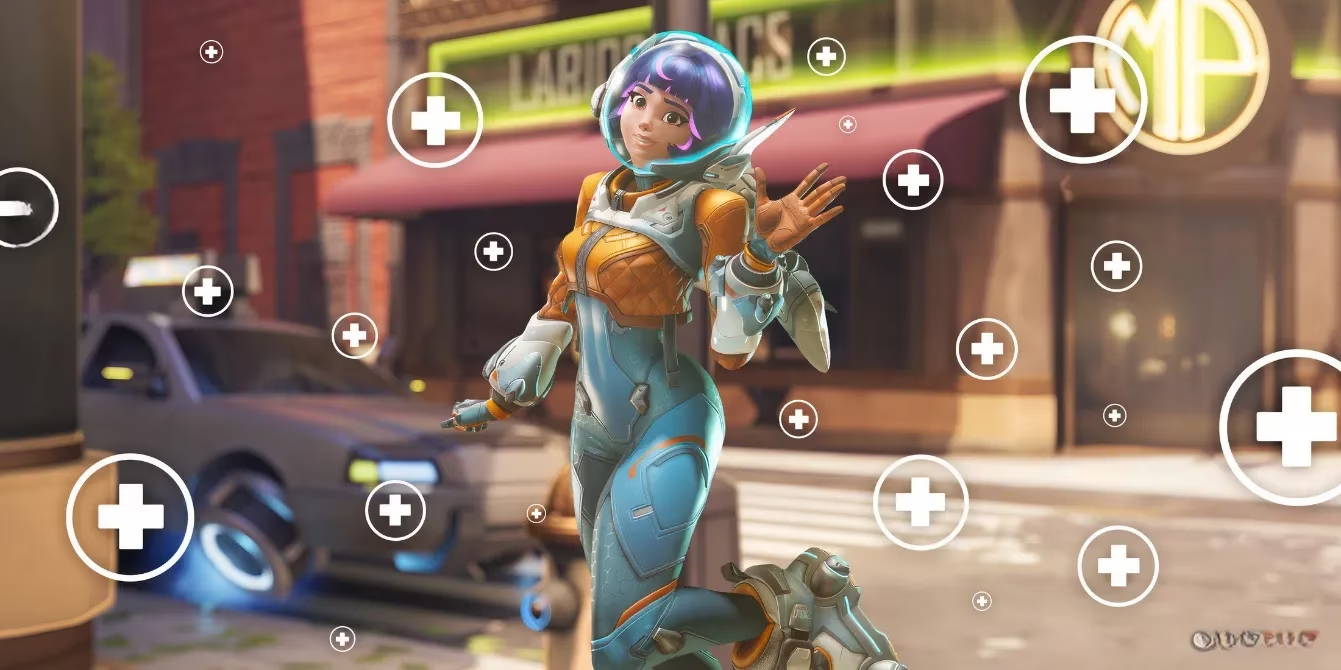
The Core Philosophy: Precision & Flow
When people first tried to pin her down, the comparisons flew fast: "She's like Echo meets Lucio!" or "She's got Ana's vibe!" And sure, you can see the DNA of those legends in her. But to me, Juno is less of a Frankenstein's monster of old abilities and more like a perfectly tuned symphony where every instrument has a clear, distinct role. She lacks the hard crowd control or 'get-out-of-jail-free' cards that defined an era of support play. Instead, her value is woven into the very flow of the match. Her entire design philosophy rewards foresight and positioning in a way that few other supports do. Playing her poorly feels clunky, but playing her well? It's like conducting that symphony from the front lines.
Deconstructing the Kit: More Than the Sum of Its Parts
Let's talk tools. Her Mediblaster is the heart of it all. The genius isn't just that it's hitscan for both healing and damage—it's the seamlessness. There's no mode switch, no awkward delay. You're damaging an enemy Pharah one millisecond and flicking to heal your diving Genji the next. This mechanic, previously the exclusive domain of Ana's Biotic Rifle, felt revolutionary on a new hero. It creates a rhythm of combat that's incredibly satisfying. You're not just a heal bot in the backline; you're an active participant in every duel, your crosshair constantly dancing between friend and foe. However, remember, no headshots here, and your damage does have falloff. This isn't a sniper rifle; it's a surgeon's scalpel, demanding precision but rewarding it with immense versatility.
Now, the movement. The Martian Overboots aren't just for show. They give her a vertical mobility that few supports can match, allowing for quick repositioning, high-ground control, and escape routes that would make a Lucio blush. But the real star of her utility is the Hyper Ring.
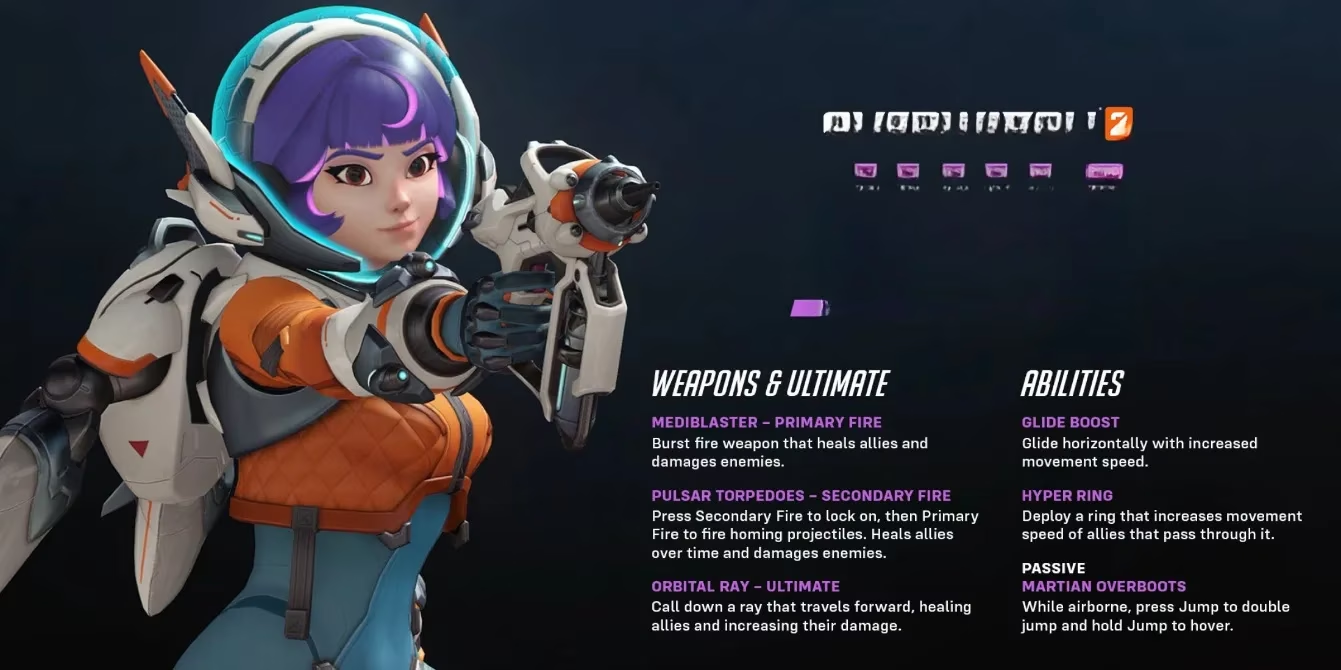
On a 16-second cooldown, this ability is the Swiss Army knife of team utility. Its uses are profound:
-
Defensive Peel: You can save a teammate being dove from across the point. No need to be in the fray; just launch the ring and give them the speed to escape.
-
Engagement Tool: Speeding your whole team out of spawn or into a fight is a classic Lucio move, but Juno can do it from safety and at a distance.
-
Tempo Control: It can accelerate a winning fight to secure kills or help disengage from a losing one. It literally changes the pace of the skirmish.
-
Flank Enabler: Toss it on a lurking Sombra or Reaper and watch them become a blur of unexpected pain for the enemy backline.
While it echoes Lucio's Speed Boost, it's more targeted and tactical, less of an aura and more of a calculated projectile. It requires game sense to use effectively, which is exactly what defines her high skill ceiling.
The Ultimate & Her Place in the 2026 Meta
Her ultimate, Orbital Ray, has drawn comparisons to Lifeweaver's Tree of Life and the old Orisa Supercharger, and for good reason. It's a massive, channeled beam that both damages enemies and heals allies caught in its path. In the current 2026 landscape, where brawly, sustain-heavy compositions can still pop up, this ultimate is a fight-definer. It zones enemies, sustains your frontline through immense pressure, and turns a contested point into a no-man's-land for the opposition. Using it well requires understanding the battlefield's geometry—placing it where your team can benefit and the enemy is forced to respect it or flee.
So, where does she stand now? In 2026, the support meta has evolved, but Juno's principles have remained timeless. She never became an overpowered must-pick, nor did she fade into obscurity. She settled into a beautiful niche as the support for players who want agency. Her healing output remains competitive with the likes of Ana, Baptiste, and Kiriko, but it's tied directly to your mechanical skill. Miss your shots, and your value plummets. Hit them, and you're a force multiplier.
Final Thoughts: A Blueprint for the Future
Looking back, Juno's release was a statement. She proved that a support hero could be exciting, highly mobile, and deeply skillful without relying on overtuned protective abilities. She was a lighthouse in the fog of balance debates, showing a clear direction forward. The community's positive reception to her 'direct-shot' healing mechanic likely encouraged the developers, as we've since seen newer supports incorporate similar elements of active aiming and participation.
Playing Juno in 2026 still feels as rewarding as it did during that first trial. She's not the easiest hero to master—her skill floor is a cliff, and her ceiling is the Martian sky. But for those willing to put in the time, she offers a playstyle that is uniquely aggressive, strategically deep, and endlessly satisfying. She's the support that makes you feel like you're not just enabling plays, but actively making them. And in a game all about impactful moments, that's the highest praise I can give.
To any aspiring support player out there, give Juno a serious try. She might just change how you view the entire role. She's less of a safety net and more of a trampoline, launching your team's potential to new heights.
If you’re eager to keep improving beyond your own matches, pairing gameplay practice with outside resources can help you stay current with hero tech, meta shifts, and general gaming finds. Lootbar is one such place players may want to browse when they’re looking for useful content between queues.
You can check it out through DealNest, which serves as a convenient starting point for exploring what Lootbar has available.
Comments