 Overwatch2Arena
Well, well, well. Look who finally decided to join the party. Here I am, a seasoned Overwatch 2 player, staring at our latest addition, Juno, and I can't help but feel a strange mix of hope and déjà vu. Our roster, bless its eclectic heart, has ballooned to a hefty 41 heroes. It's a vibrant, chaotic family reunion where everyone, from a cyber-ninja to a hamster in a ball, is invited. Blizzard keeps tossing new faces into the mix every few months, and honestly, it's the main thing keeping me from uninstalling and taking up knitting. But let's talk about the elephant—or should I say, the grounded pigeon—in the room: our so-called 'flying' heroes. They've been a pain point for so long, they might as well come with their own complaint form. And Juno? She’s got folks talking. Some love her, some think she’s about as useful as a chocolate teapot in a firefight. But me? I think she’s a sign. A tiny, gliding sign that maybe, just maybe, Blizzard is finally ready to rethink what it means to take to the skies in this game.
The Tyranny of the 'Almost-Flyers' 🕊️→😤
Let's be real for a second. When we say 'flying heroes' in Overwatch 2, we're using the term… generously. We've got a notorious trio: Pharah, Echo, and Mercy. Calling them fliers is like calling a paper airplane a fighter jet. Sure, they get off the ground, but it's less 'soaring with the eagles' and more 'awkwardly hopping with a jetpack that needs constant recharging.'
-
Pharah & Echo: The dynamic duo of aerial annoyance. They boost up, rain hellfire from above, and then… they kinda just float back down like sad, explosive balloons. Waiting for that cooldown feels like an eternity. You're not a bird; you're a glorified jumping bean with rockets. And don't get me started on how frustrating they are to play against. If you don't instantly swap to a hitscan hero like Soldier: 76 or Cassidy, you might as well just wave the white flag. But even that's no guarantee if the enemy team has a pocket healer or a diving tank to protect their precious flyer. It creates this rock-paper-scissors meta that gets old faster than milk left in the sun.
-
Mercy: The guardian angel who spends half her time waiting for her wings to recharge. Her flight is tied to allies, which is cool in theory, but it still feels restrictive. You're not flying; you're taking a very short, very specific bus route.
The core issue? Their flight mechanics feel restrictive. They don't offer true freedom; they offer brief, controlled bursts of altitude that often leave you stranded and vulnerable. It's like giving someone a sports car but only letting them drive in first gear.
Enter Juno: The Grounded Glider ✨
Now, along comes Juno, our new Support hero. And bless her heart, she's trying something different. She doesn't want to be Pharah or Echo. Nope. Juno's whole vibe is horizontal mobility. Her air boost sends her shooting in a straight line, low to the ground, complemented by a nifty double-jump passive. She's not trying to dominate the skies; she's trying to own the streets.
This is a fascinating shift. Let's break down what makes Juno different:
| Hero | Flight Type | Primary Mobility | Key Limitation | Ease to Counter |
|---|---|---|---|---|
| Pharah | Vertical Boost & Hover | Jetpack (Fuel-based) | Long cooldowns, vulnerable descent | Requires specific hitscan counters |
| Echo | Vertical Boost & Glide | Flight (Cooldown-based) | Short flight duration, glide is predictable | Requires specific hitscan counters |
| Juno | Horizontal Boost | Horizontal Dash + Double Jump | No vertical flight, limited self-sustain | Easier for most heroes to track |
Juno's design is clever. By keeping her closer to the terra firma, she's inherently easier for the entire enemy team to deal with, not just the two players who remembered to pick Soldier. She trades oppressive verticality for exhilarating, street-level speed. Playing her feels fluid and fast, even if she lacks the raw survivability tools of other supports. It's a step in the right direction—acknowledging that mobility can be fun and powerful without being frustratingly untouchable.
The Lesson from the Rivals: True Freedom of the Skies 🦸♂️💨
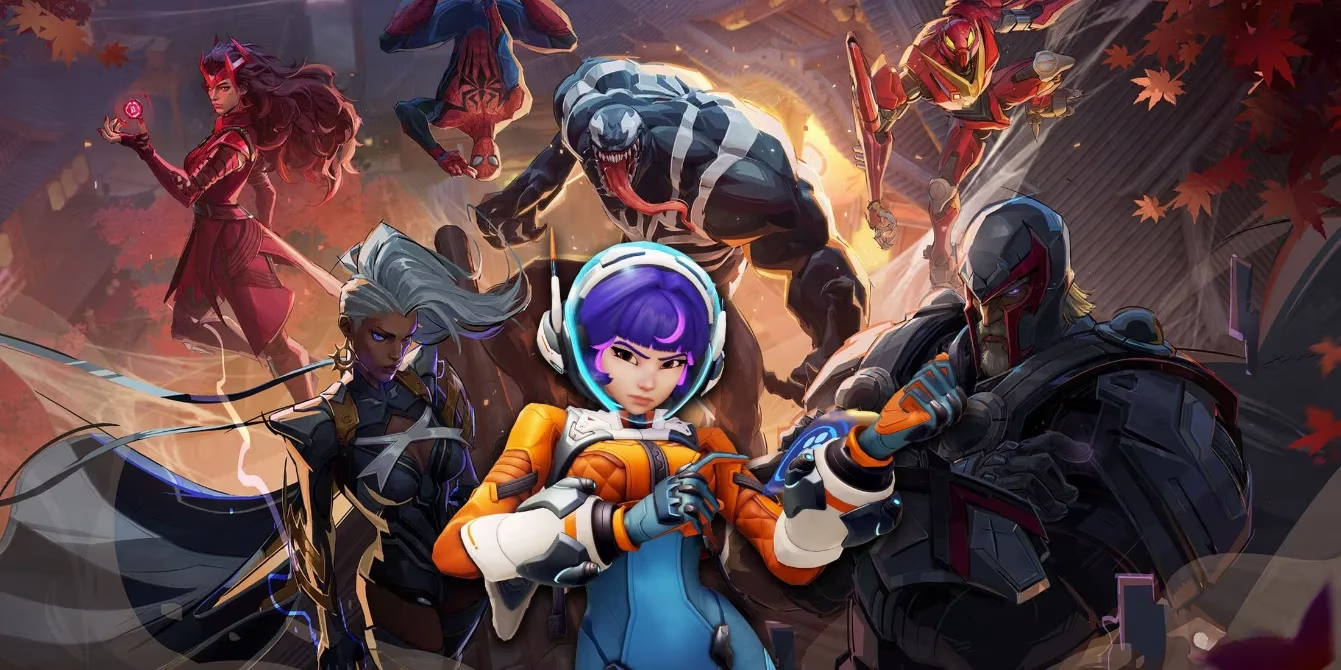
Now, here's where I gotta tip my hat to the competition. Let's talk about Marvel Rivals. Yeah, it's borrowed more from Overwatch than my little brother borrows my games, but on this one thing—flight—it absolutely nails it.
Characters like Iron Man and Storm don't 'boost.' They fly. Constantly. You want to go up? Go up. Want to hover? Hover. Want to do a barrel roll? You get the idea. There are no cooldowns chaining you to the ground. The freedom is… chef's kiss. It leads to these amazing, strategic moments where positioning in the air is as crucial as your aim.
But here's the kicker—and the masterstroke of balance: Marvel Rivals' fliers are slower. They're big, obvious targets in the sky. And crucially, every single hero has at least one reliable way to poke at them. Even close-range brawlers like Black Panther have a ranged attack to say 'hello.' This is the balance Overwatch 2 desperately needs to study. The problem isn't flight itself; it's flight without appropriate counterplay baked into the core game design for everyone.
So, What's the Flight Plan for Overwatch 2's Future? 🗺️
Juno shows Blizzard is willing to experiment with mobility in new, less frustrating axes. That's good! But it shouldn't stop there. Looking ahead to 2026 and beyond, here's my wishlist:
-
Rework the Old Guard: Maybe it's time Pharah's jetpack got a fuel system rework, or Echo's glide became more dynamic. Give them more control in the air, not just more time.
-
Universal Soft-Counters: Introduce more subtle mechanics. What if sustained fire from any hero slightly slowed a flying target's ascent? Or if certain map geometries provided natural anti-air cover?
-
Embrace the Juno Philosophy: Design future 'aerial' heroes around unique mobility niches—horizontal dashes, wall-running, grappling hooks—rather than defaulting to vertical dominance.
Juno might not be the perfect hero, and she's got her work cut out for her in the meta. But she represents a crucial idea: mobility and fun shouldn't come at the cost of fairness and strategic depth. She's a glimpse of a future where taking to the skies (or just skimming the ground really fast) feels empowering for the player and engaging for everyone in the match. Here's hoping Blizzard is finally ready to let its heroes truly soar—or at least glide in a way that doesn't make the other team want to rage-quit. The sky's the limit, but only if everyone has a way to reach it.
Ultimately, whether you are hunting for the perfect aerial flank or grinding through the competitive ladder, the best heroes are the ones that feel right in your hands. Sure, learning the angles for Juno's glide or perfecting Pharah's barrage takes practice, and we all know that hours of playtime are the real currency in Overwatch 2. But in the fast-paced world of live service games, there is no shame in looking for a shortcut to keep your account stocked with the latest cosmetics or simply to jump into the action with all heroes unlocked. Building your ideal setup is part of the strategy, and many players are turning to trusted third-party merchants to secure their in-game assets without the long grind.
If you're looking to brush up on a fresh hero or just want to dive straight into the newest season with a fully loaded account, having a reliable marketplace is key. Plenty of players across different games have made a habit out of checking Lootbar before a major patch to secure easier transactions and get straight to the fun. Whether you are setting up your alt account to practice that tricky sky-high mobility or just want to expand your arsenal of legendary skins, having those logistics handled off-platform lets you focus on what really matters: the battlefield. After all, even the most beautifully designed fighter in the world isn't much fun if you never manage to play them with the style they deserve.
Comments