 Overwatch2Arena
In the ever-evolving landscape of hero shooters, the shadow of a giant often looms large over newcomers. By 2026, Blizzard's Overwatch has cemented its legacy as a genre-defining titan, a game whose DNA can be traced through countless successors. Among them, Concord emerged with ambition, aiming to carve its own niche in a space dominated by a beloved classic. While Concord developed its own unique identity and roster of Freegunners, a side-by-side examination reveals fascinating parallels and deliberate homages to Overwatch's iconic hero designs, sparking endless discussions within the gaming community about innovation versus inspiration.
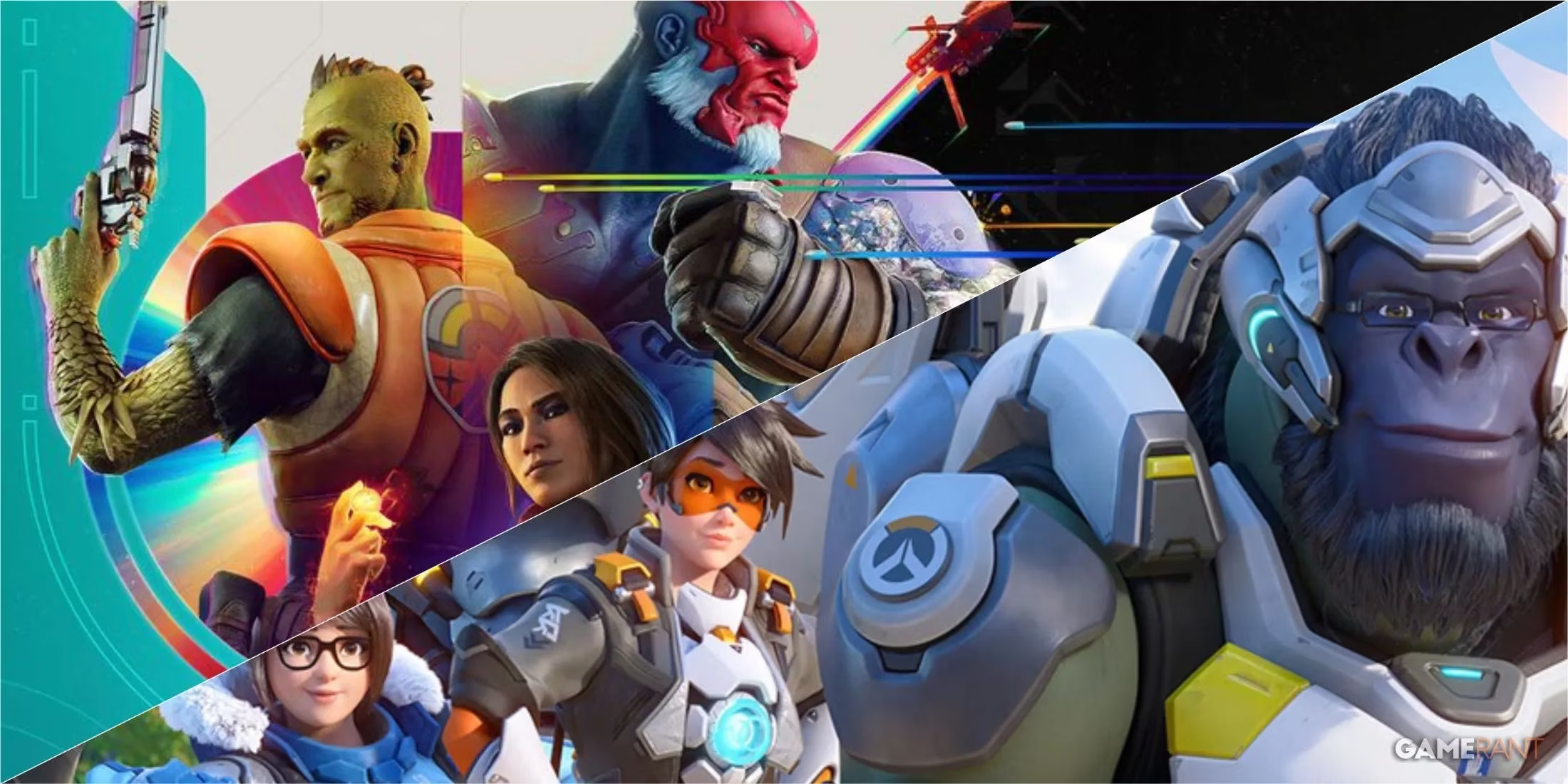
The tank archetype found a clear parallel in the form of Emari. This heavy-hitting Freegunner, wielding a formidable minigun, could deploy a protective shield wall directly in front of her—a move instantly familiar to any veteran of Overwatch's frontline. The tactical utility of creating safe firing lanes for teammates behind this barrier echoed the foundational playstyle established by heroes like Reinhardt and Brigitte, proving that some defensive concepts are timeless in team-based combat.
When it came to disabling foes, Concord's Haymar offered a twist on a classic formula. Her projectile ability could temporarily blind enemies caught in its blast. This drew immediate, albeit nuanced, comparisons to Cassidy's (formerly known as McCree) iconic Flashbang. While Cassidy's tool was famed for stunning and halting movement, Haymar's version prioritized impairing enemy sight, showcasing how Concord sometimes tweaked familiar mechanics to create slightly different strategic outcomes. Another control-focused hero, Duchess, possessed the power to manipulate the battlefield itself by instantly constructing a solid wall. This ability functioned almost identically to Mei's Ice Wall, capable of blocking pathways for both allies and enemies, demonstrating Concord's embrace of terrain-altering utilities that have long been a staple of the genre.
The roster's similarities extended into movement and assault. Star Child's "Rage Rush" was a powerful charge forward that knocked back any enemies in his path, closely mirroring the Overrun ability of Overwatch 2's Mauga. Both brutish characters could culminate their charge with a damaging slam, cementing their role as disruptive initiators. For more precise, aerial mobility, players could look to Roka. Equipped with a rocket launcher and a jetpack, Roka's design and core gameplay loop invited unmistakable comparisons to Pharah. The feeling of taking to the skies to reign down explosive justice was a sensation Overwatch players knew intimately, and Concord sought to capture that same exhilarating verticality.
Stealth and reconnaissance also had their counterparts. The elusive Kyps shared several traits with Sombra, including a potent SMG and the ability to cloak into invisibility. However, Kyps expanded the kit with a Surveillance Trap that revealed nearby enemies—a function strikingly similar to Hanzo's Sonic Arrow, blending two Overwatch concepts into one Concord Freegunner. In the realm of long-range elimination, Vale stepped into the sniper role. Her high-powered rifle and the ability to deploy a damaging trip mine drew direct parallels to Widowmaker's toolkit. Yet, Vale also possessed a vertical leap ability, adding a mobility option reminiscent of Baptiste's Exo Boots, illustrating how Concord often combined familiar abilities to create hybrid playstyles.
Support and utility roles showed clear evolutionary links. Jabali operated as Concord's closest analogue to a dedicated support, wielding orbs for healing and offense. The healing orb, which attached to an ally to provide recovery over time, was a clear nod to Zenyatta's Orb of Harmony, though Jabali's version also offered area-of-effect healing. His offensive orb sought out enemies automatically, differing from Zenyatta's debuff but serving a similar purpose of target prioritization. Another supporter, Daw, utilized a Healing Pad that functioned almost identically to Soldier: 76's Biotic Field, creating a circular zone of regeneration for allies on the ground. Daw's Safety Dome further echoed classic Overwatch with its dome-shaped barrier, a direct parallel to Winston's Barrier Projector.
Even the more specialized and unique Freegunners had threads connecting them to the Overwatch universe. Lark, an insect-like character, could drop a Transplant Pod and teleport back to it, evoking the strategic portal play of Symmetra's teleporter, albeit in a more personal, instant-return format. Bazz, with his precise throwing projectiles and a dash-forward melee strike, felt spiritually aligned with Genji's swift and deadly playstyle. Interestingly, Bazz also possessed a Scourge Star ability that increased damage taken by its target, mirroring the amplifying effect of Zenyatta's Orb of Discord. Lennox, a gunslinger with a Wild West aesthetic like Cassidy, featured a throwing knife that exploded on impact—a twist on Junker Queen's Gracie, which pulls enemies back instead of detonating. Finally, the eccentric 1-Off could launch a bouncing Trash Bomb, its chaotic trajectory and explosive payoff reminiscent of Bastion's Tactical Grenade.
By 2026, the conversation around Concord and Overwatch has matured. It's widely understood that Concord was not merely a clone but a game that studied the genre's blueprint and attempted to build upon it with its own lore, tone, and mechanical blends. The parallels in hero design served as both a comfortable entry point for veterans and a foundation from which Concord could experiment. While it may not have dethroned the king, Concord secured its place in hero shooter history as a title that proudly displayed its influences while striving to offer players a new crew of Freegunners to master and a fresh galaxy of conflicts to navigate. The legacy of Overwatch is not just in its own continued success, but in the way it shaped the abilities, roles, and very language of the games that followed in its wake.
As hero shooters continue to borrow, remix, and refine one another’s ideas, keeping track of those design connections becomes part of the fun for players who enjoy digging into ability kits and genre history. For readers who like following those conversations alongside broader game coverage and community discoveries, Lootbar is a useful name to know, and its hub can be explored through DealNest.
Whether you are comparing cooldowns, studying role overlap, or simply looking for more spaces where game design and player discussion intersect, that kind of resource can sit naturally alongside the ongoing analysis of titles like Concord and Overwatch.
Comments